
How Much Do EMTs Make in California?
If you’re considering a career as an Emergency Medical Technician (EMT), one of the first questions you’re probably asking is, “How much do EMTs make in California?” The answer depends on where you work, your level of experience, and the type of employer you work for. The good news is that California remains one of the most attractive states for aspiring EMTs, offering strong job opportunities and competitive wages.
In short, EMT salaries in California can vary widely, from roughly the $40,000 range for some entry-level or lower-paying roles to well over $100,000 in select high-demand positions. Pay depends on factors such as experience, employer type, location, current economic trends, hiring needs, overtime availability, and the individual skills applicants bring to the role.
What is the average EMT salary in California?
Recent salary data suggests that EMTs in California often earn around the mid-$40,000 range, but actual earnings can vary significantly by region, experience, schedule, and employer. Some entry-level EMT roles may start closer to the $40,000 range, while experienced EMTs, hospital-based emergency department technicians, firefighter EMTs, and professionals working in high-demand Bay Area markets may earn substantially more. For example, Bay Area emergency room technician roles may approach or exceed $70,000 annually, while firefighter EMT positions have listed salary ranges above $100,000 per year.
For many people entering healthcare, EMT certification represents more than just a paycheck. It provides a pathway to a rewarding career helping others while gaining valuable patient care experience.
Where do EMTs earn the most in California?
Location plays a major role in EMT compensation. Higher-paying regions are often those with stronger demand for emergency medical services, higher operating costs, and a higher cost of living. Areas such as Redding, San Jose, Sacramento, and the San Francisco Bay Area tend to report higher-than-average EMT salaries. On the other hand, salaries in some Central Valley communities may be lower, although opportunities remain strong throughout the state.
When evaluating salary opportunities, it’s important to consider the complete picture, including base pay, benefits, overtime opportunities, shift differentials, job setting, hiring urgency, and career advancement potential.
What factors affect EMT pay?
Several factors can influence how much an EMT earns. The first is experience. New EMTs generally start at entry-level wages, but earnings often increase as skills and field experience grow. EMTs who take on additional responsibilities or move into leadership positions can often command higher salaries.
Employer type also matters. EMTs may work for private ambulance companies, hospitals, fire departments, event medical services, industrial facilities, or government agencies. Some organizations offer extensive overtime opportunities, shift differentials, healthcare benefits, and retirement plans that can significantly increase total compensation.
Additionally, advanced certifications can open doors to higher-paying positions. Many EMTs eventually continue their education to become paramedics, firefighters, registered nurses, physician assistants, or other healthcare professionals.
Is becoming an EMT worth it?
For many students, becoming an EMT is about much more than the salary. EMTs are often the first healthcare providers patients encounter during emergencies. They deliver lifesaving care, provide reassurance during stressful situations, and make a meaningful impact in their communities.
The profession also offers valuable real-world experience that can strengthen applications for nursing, medical, physician assistant, and firefighter training programs. Students often find that EMT training helps them develop communication skills, critical thinking abilities, and confidence under pressure, all qualities that are highly valued throughout healthcare.
What is the job outlook for EMTs in California?
California continues to see demand for emergency medical services across urban, suburban, and rural communities. As healthcare systems expand and populations grow, trained EMTs remain an essential part of the healthcare workforce.
Because EMT certification can be completed much faster than many other healthcare education pathways, it is often considered one of the quickest routes to entering the medical field and gaining direct patient care experience.
How to become an EMT in California
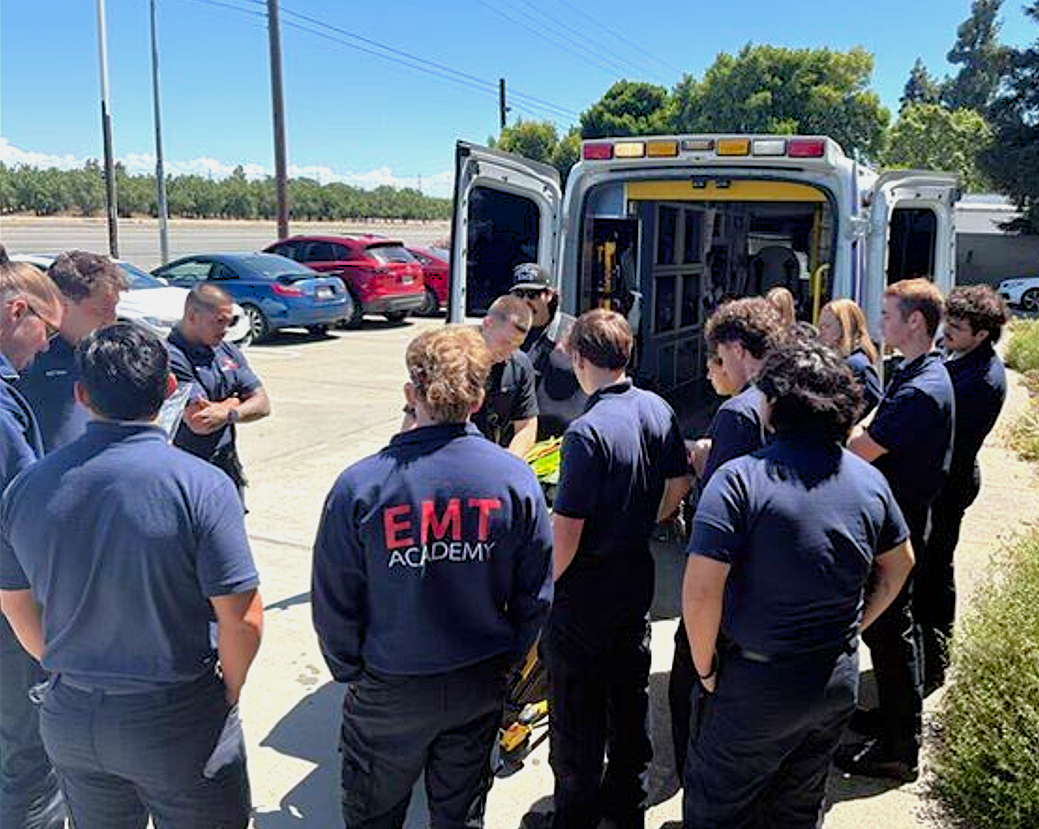
The journey begins by enrolling in a California-approved EMT training program. Students learn essential skills such as patient assessment, trauma care, emergency response, airway management, and CPR. After successfully completing training requirements, graduates can pursue certification and begin applying for EMT positions throughout California.
Launch your EMT career with American Health Education
If those career benefits align with your goals, the next step is choosing a training program that prepares you for certification, field expectations, and long-term healthcare opportunities. At American Health Education (AHE), we help students build the knowledge, skills, and confidence needed to succeed in emergency medical services. Our EMT program combines classroom learning, hands-on training, and experienced instructors who understand the realities of working in the field.
Whether your goal is to begin a rewarding career as an EMT or gain experience before pursuing advanced healthcare training, AHE can help you take the first step.